Highlights from the vitagroup HIP Summit 2026
Accelerating collaboration and innovation – with an open app ecosystem. Under this motto, the second vitagroup HIP Summit took place on 3 March. Leading figures in the digital transformation of healthcare gathered at the SAP Garden in Munich to see how collaboration on HIP turns collaboration into real results. Here are the highlights of the day.
A memorable opening on the ice
The second HIP Summit in Munich began with an impressive opening show in the SAP Garden arena.
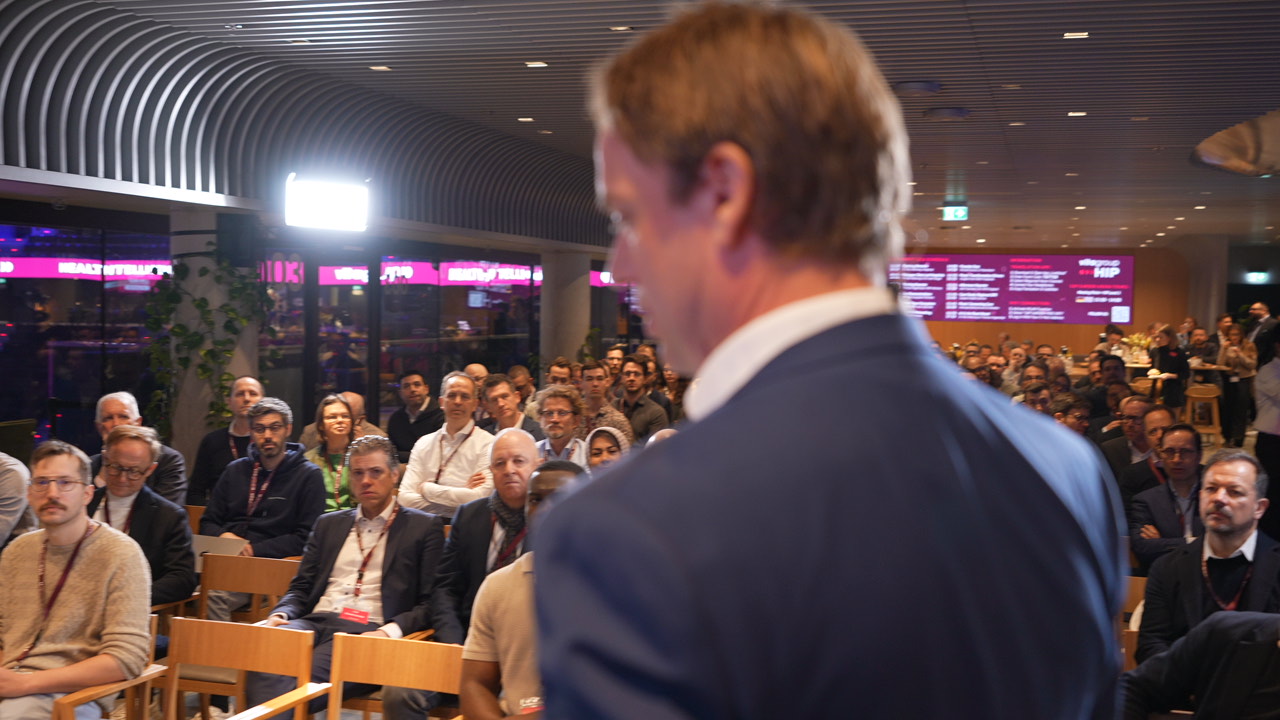
Opening remarks – the Summit begins
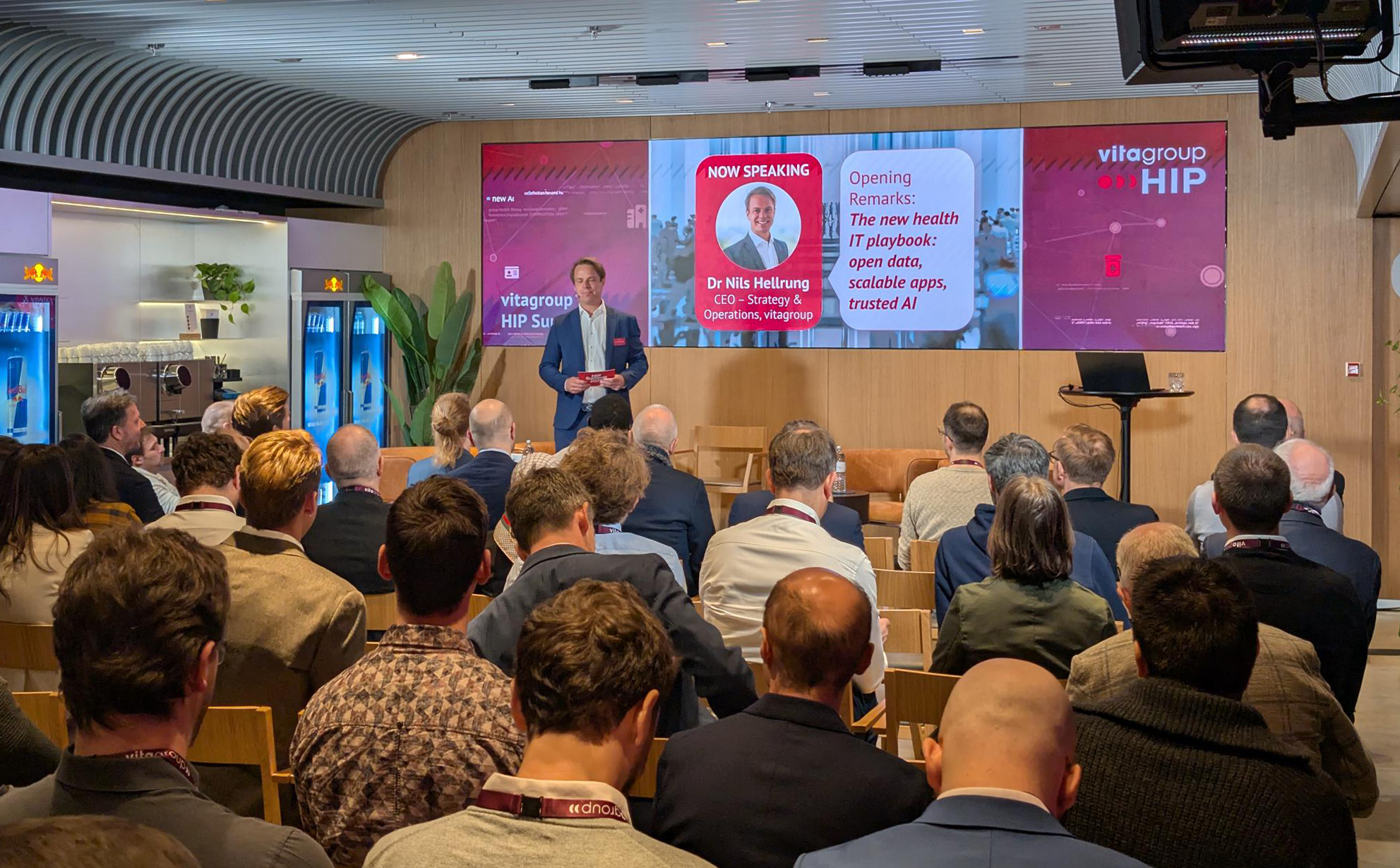
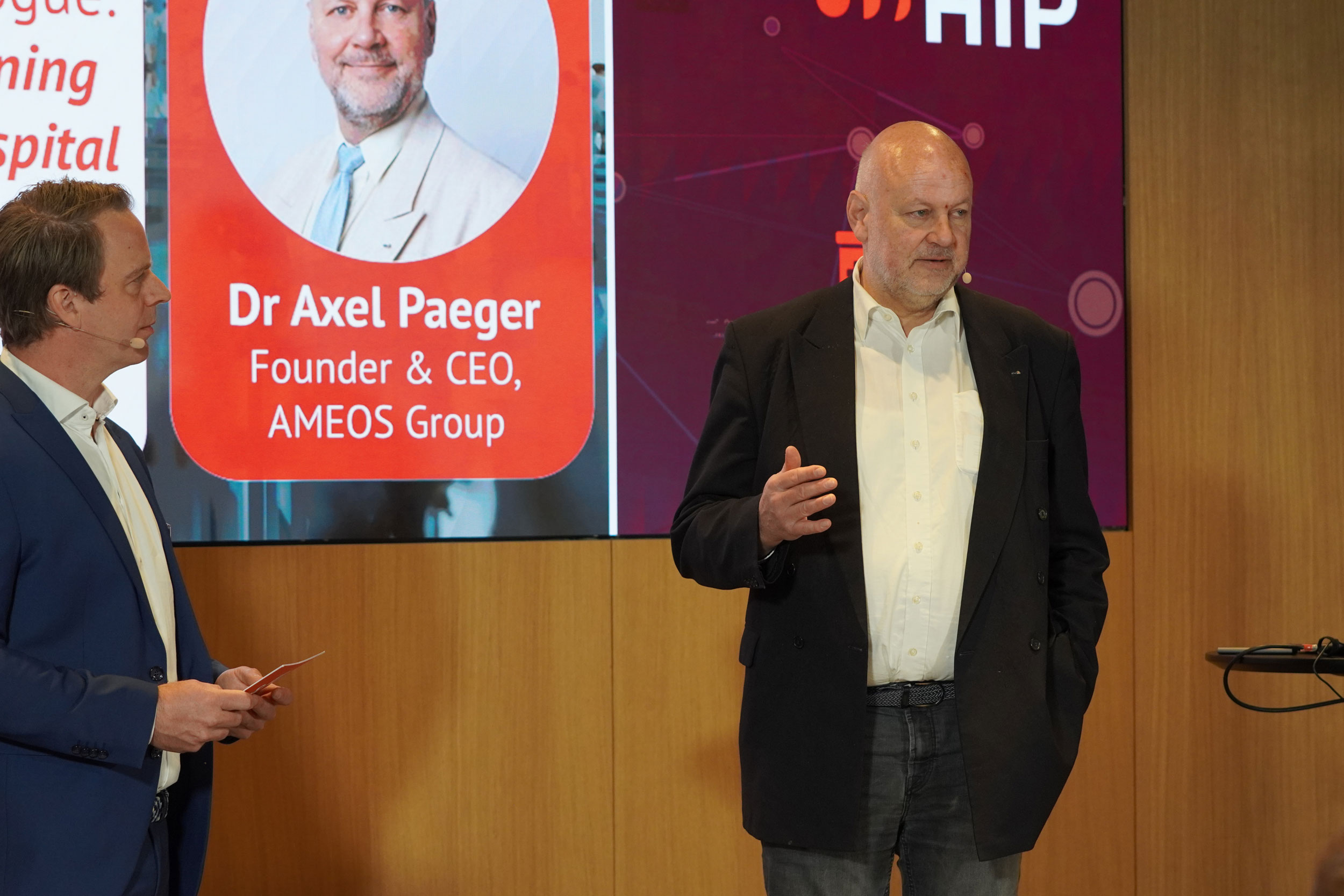
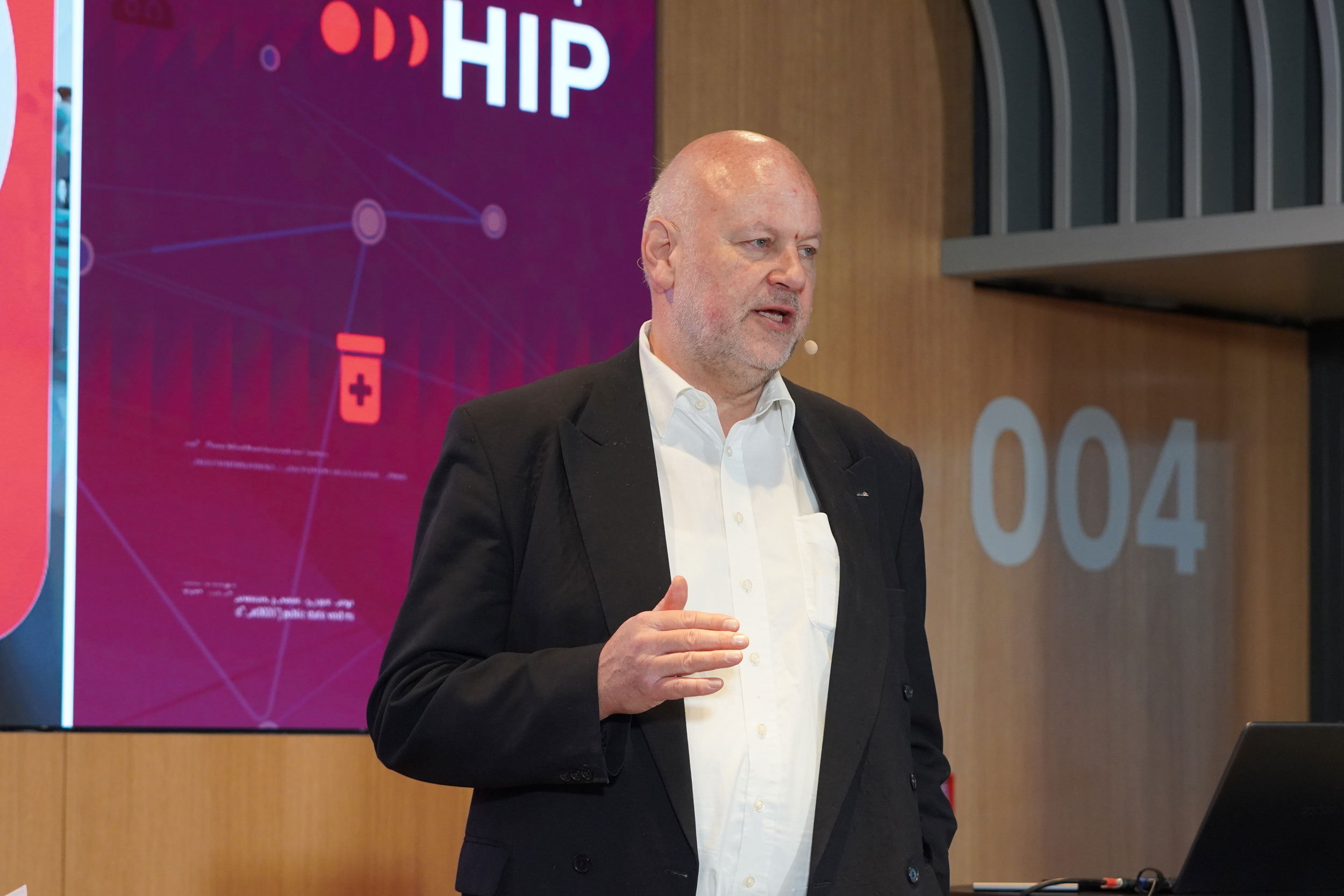
Dr. Nils Hellrung, Chief Strategy and Operations Officer at vitagroup, opened the Summit with a discussion with Dr. Axel Paeger, Founder and CEO of AMEOS Gruppe, titled “Running a hospital group on data.” They discussed the role of technology in healthcare and reflected on lessons learned from the cyberattack on the group last year.
Looking back at the past decades, Dr Paeger emphasised that “open systems are the ones that are sustainable,” while proprietary solutions risk creating dependency and driving up costs: “we should not lock ourselves in when it comes to data.” His view on digital innovation is pragmatic: “Digitalisation has to pay off,” improving both patient outcomes and efficiency. If that is not clear, he added, “we would rather be slow than digitalise for the sake of digitalising.”
Keynote: From EHR systems to the AI era
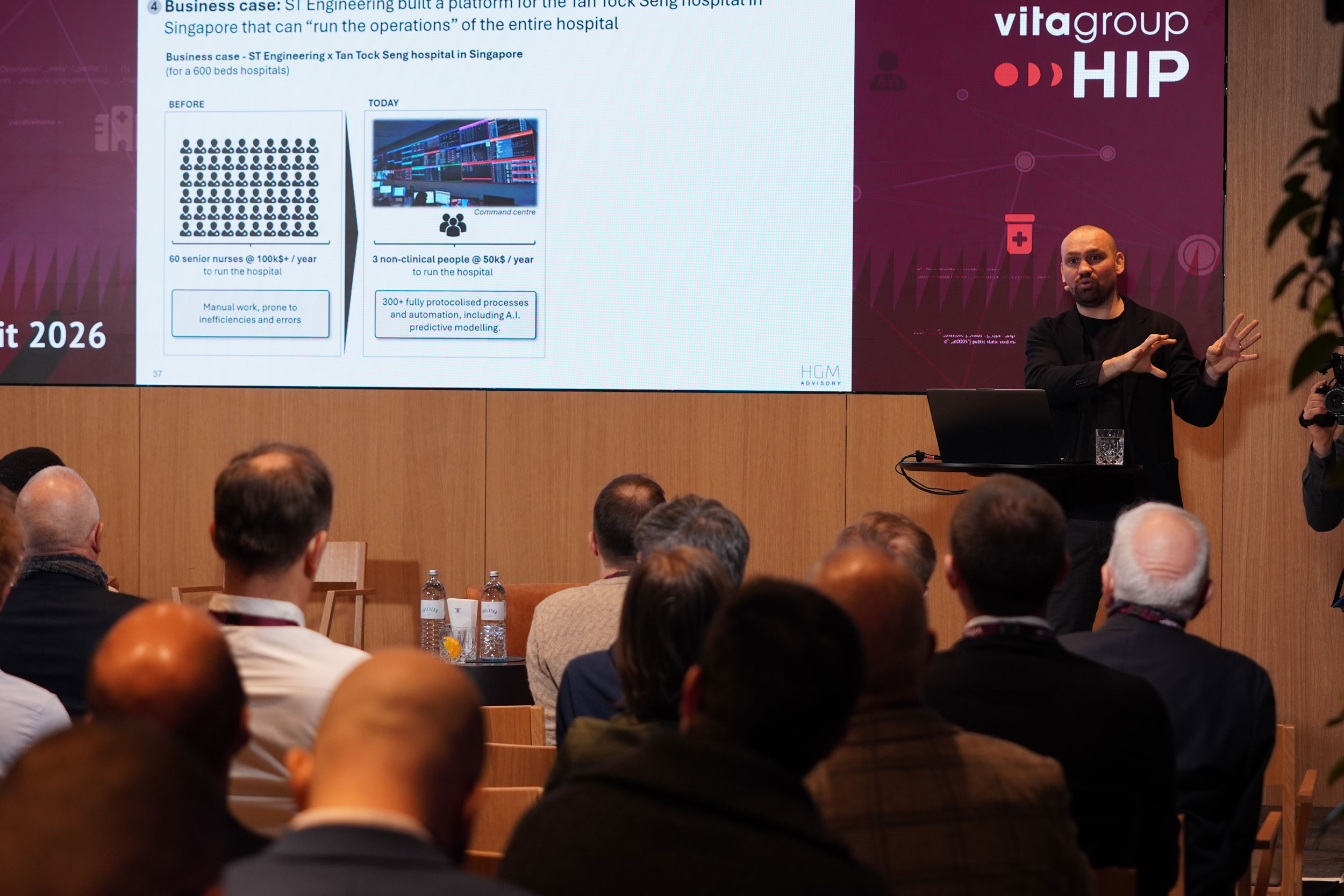
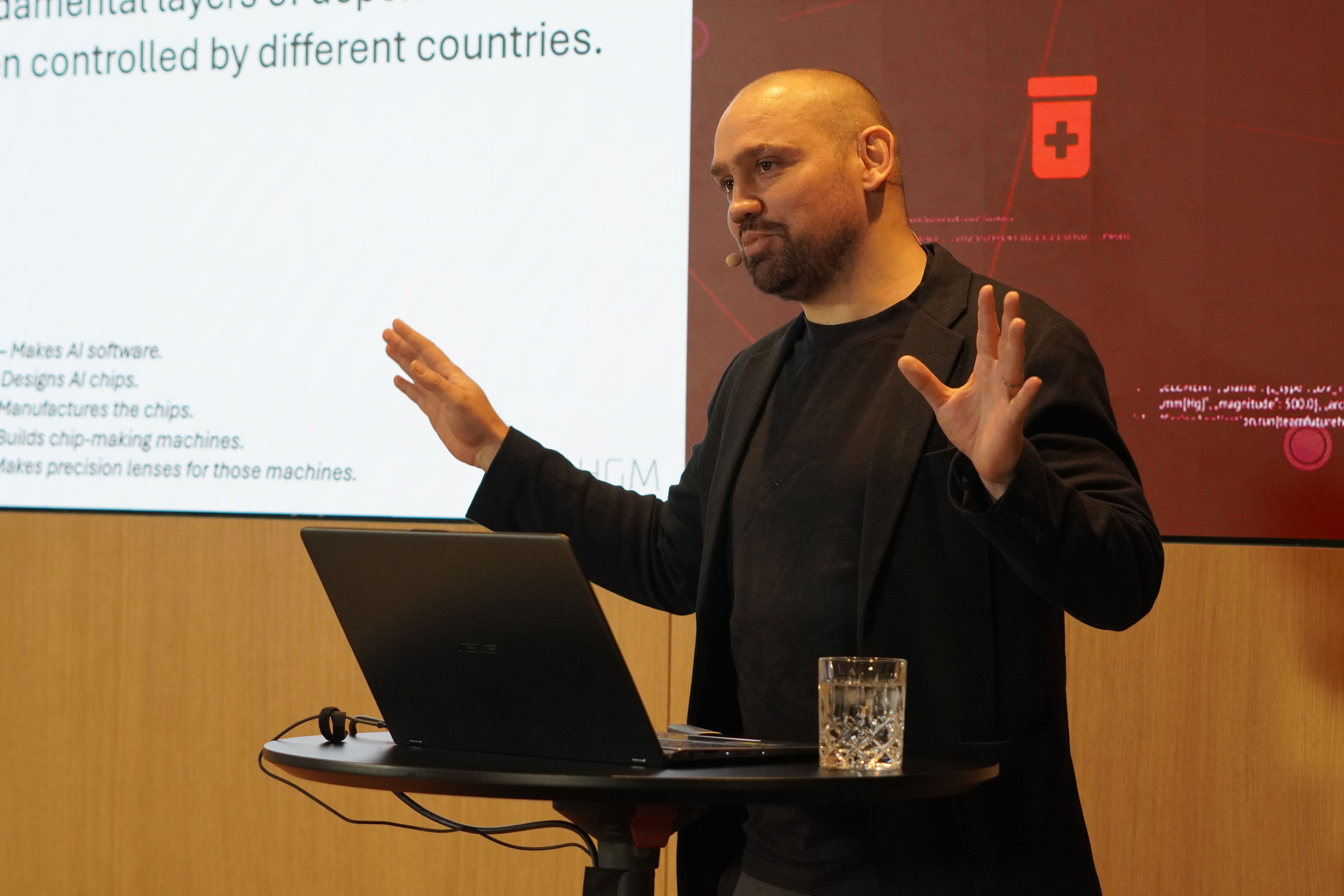
In his morning keynote, “Towards a sovereign and AI-ready tech stack in healthcare,” Thomas Hagemeijer explores the future architecture of healthcare technology and the shift from EHR-driven systems to an AI-native era. Hospitals are at a crossroads, moving away from monolithic, closed systems towards open, modular architectures.
In this context, separating the data layer from applications becomes essential to be AI-ready. The first impact of AI is expected to appear in administrative workflows, before expanding into clinical orchestration through AI agents and new operating models. The main barriers remain budget, talent and governance, with hospital IT still underfunded.
Real-world examples: the HIP app ecosystem in action
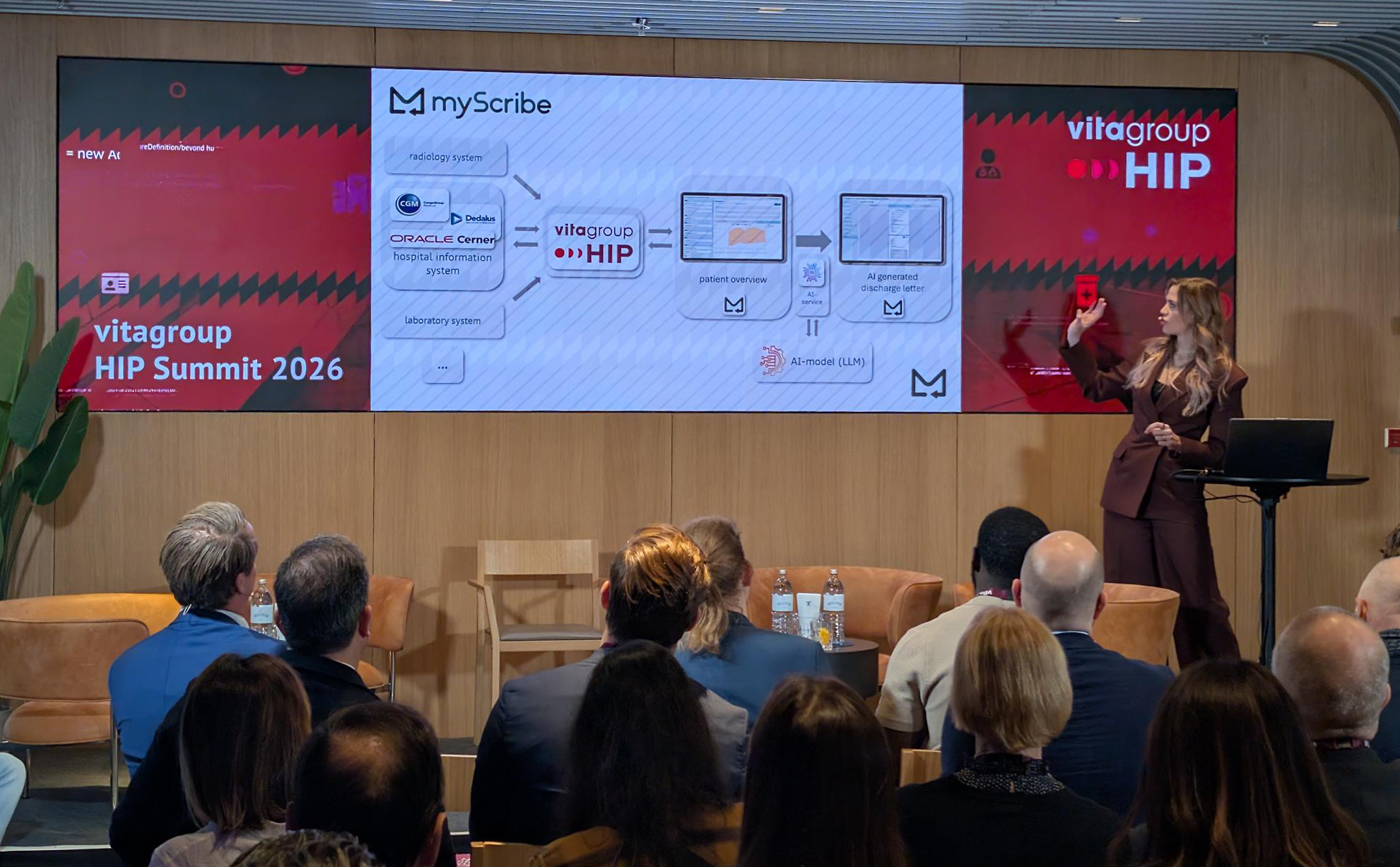
In the following live demo, “vitagroup HIP partner apps in action,” Dr Birger Haarbrandt, Head of Tech Advisory at vitagroup, together with Angus Forth, Chief Commercial Officer at Big Picture Medical, Dr med Ira Stoll, CEO of myScribe, and Michael Roiss, CEO of Treetop Medical, demonstrated what an app ecosystem looks like in practice. Using the example of a 67-year-old patient with a pulmonary embolism, they walked through the care pathway and showed how different applications can work together on a shared data layer to support clinical decision-making and workflows.
Digital health apps beyond pilot projects
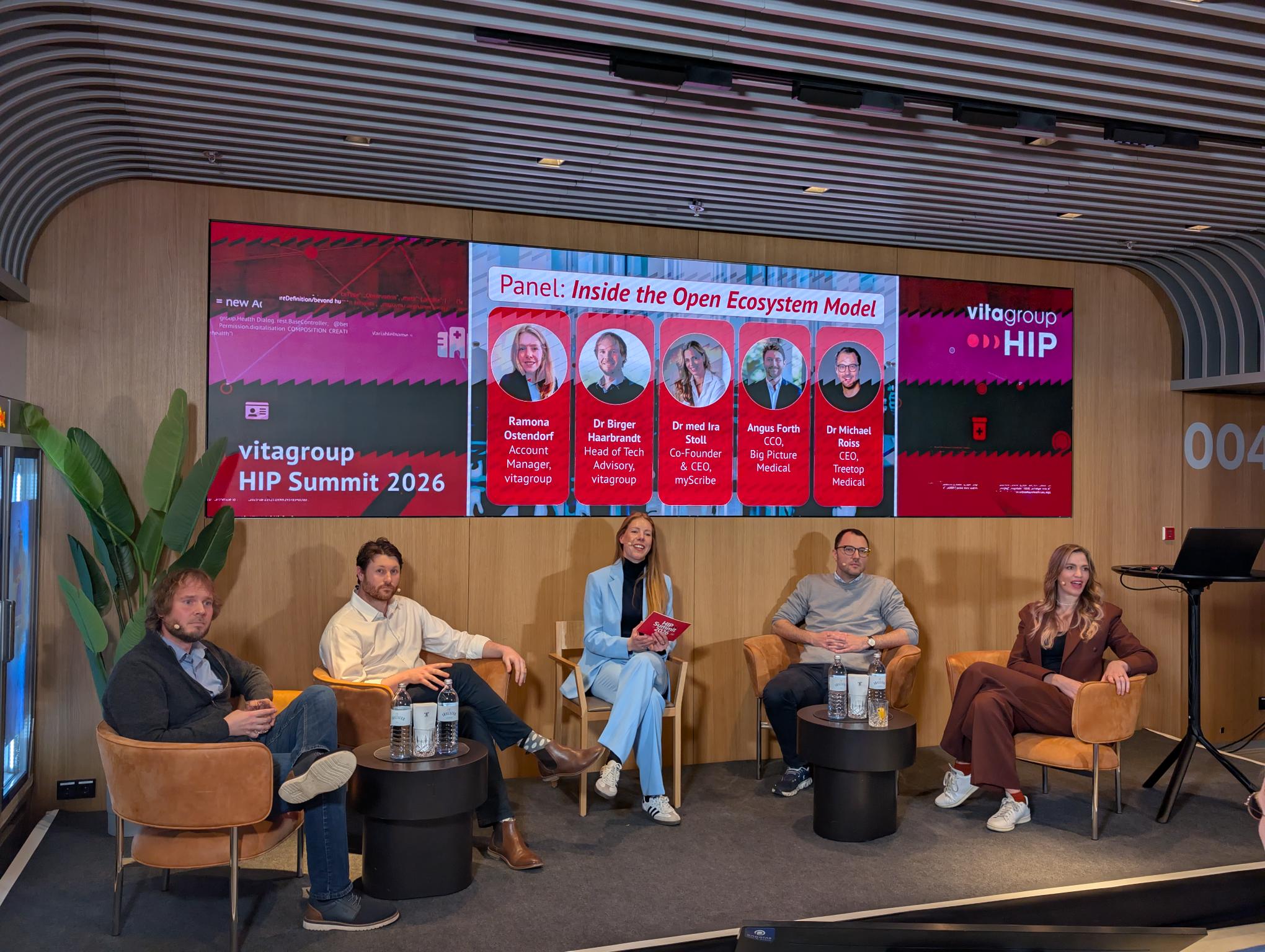
The morning concluded with a roundtable discussion titled “Can digital health apps move beyond pilots? Inside the open ecosystem model.” The session was moderated by Ramona Ostendorf, Account Manager at vitagroup, together with the app partners. The discussion highlighted that innovation in healthcare is no longer about individual solutions, but about how effectively they integrate and operate within a broader ecosystem.
During the lunch break, there was time for food and networking in the Vendor Garden, and participants explored cutting-edge solutions from our app partners. Seamlessly connected to HIP, these solutions realise their full potential and demonstrate how innovation in healthcare works today.
Data is the new currency
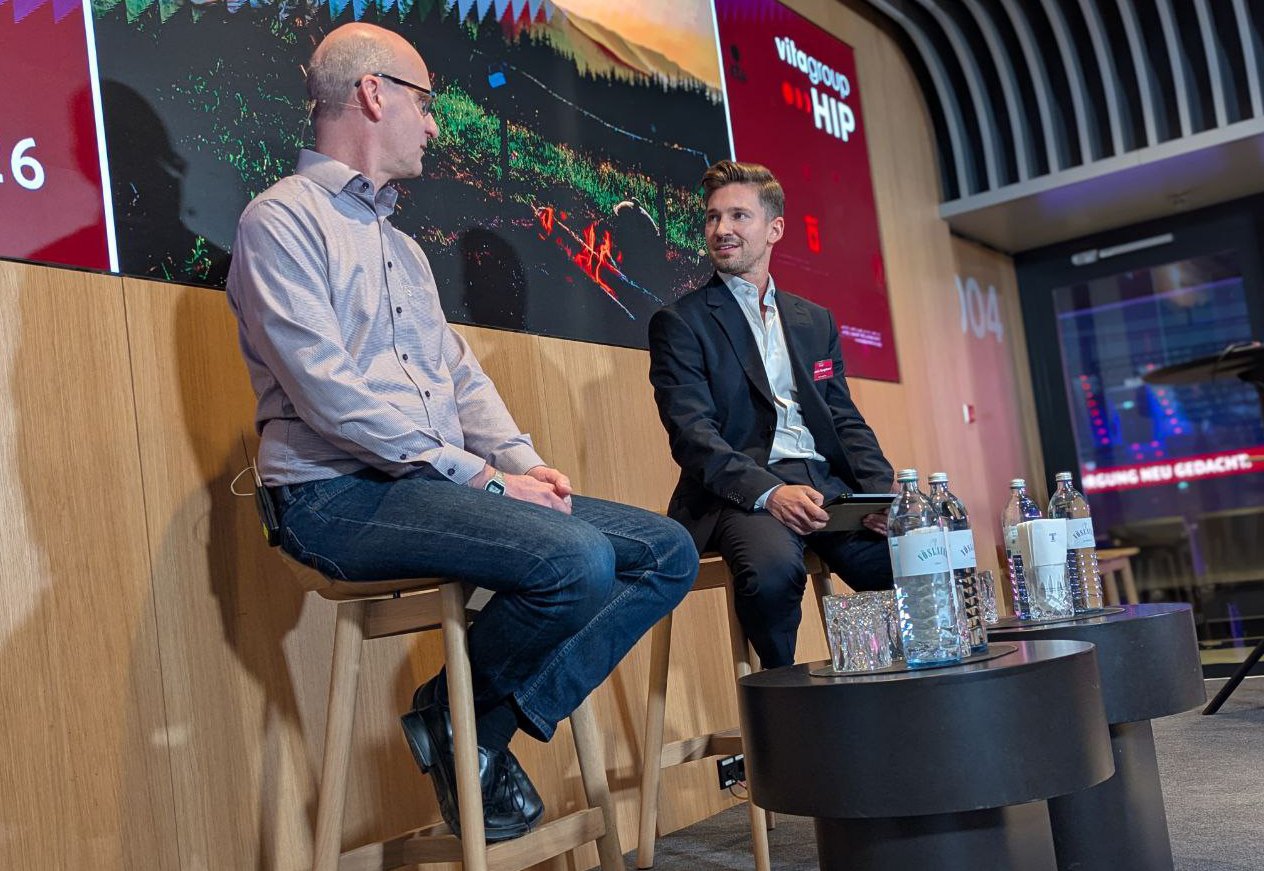
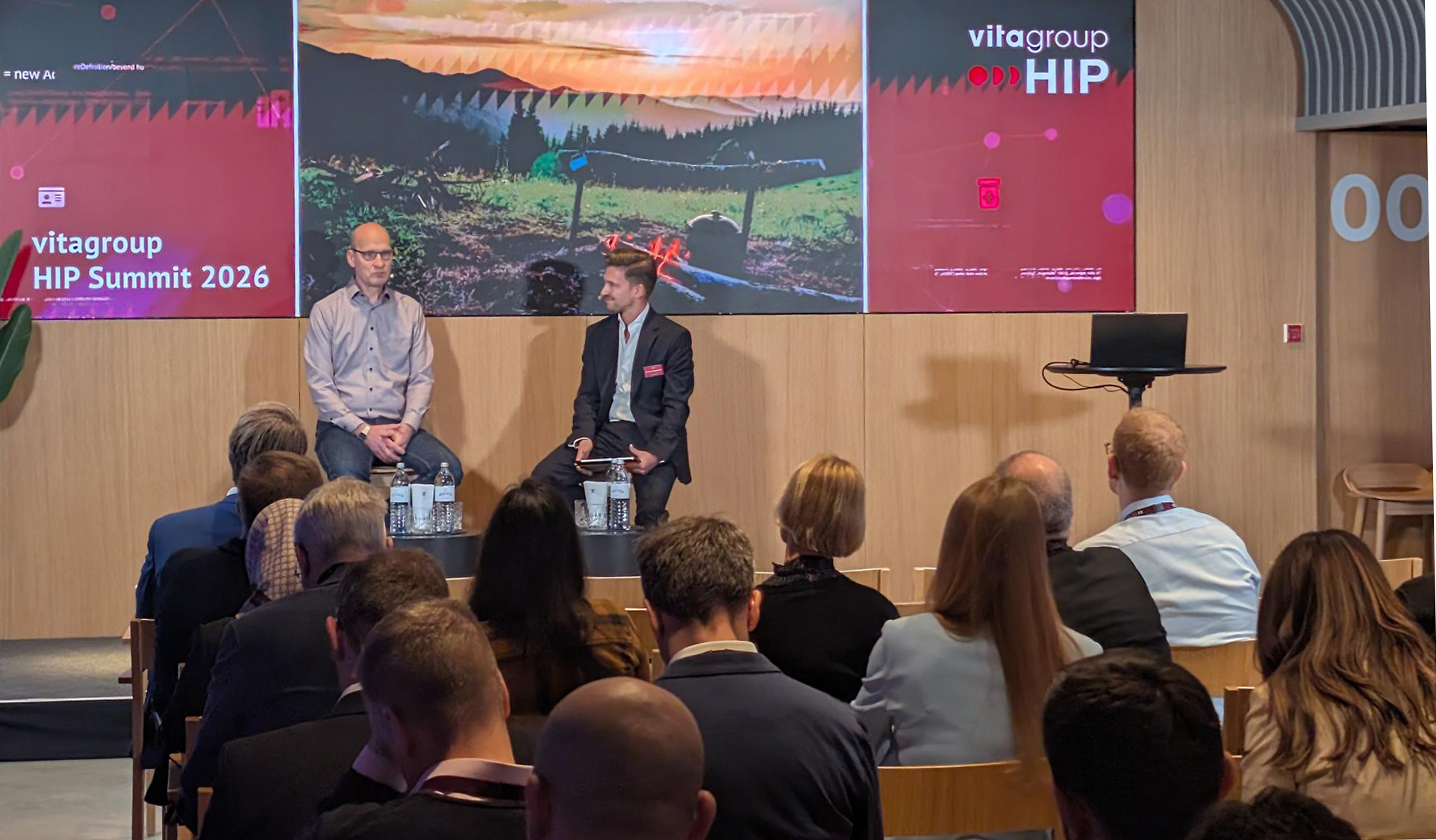
The afternoon began with a fireside chat between Joachim Neugebauer, Vice President Clinical Care Solutions at vitagroup, and Richard Karsch, Head of Research IT at the Central Institute of Mental Health (CIMH), Mannheim. Karsch emphasised that data is the new currency in healthcare: “We need to consider carefully how we use it, manage it responsibly, and invest it wisely. That is why we rely on the open platform HIP.”
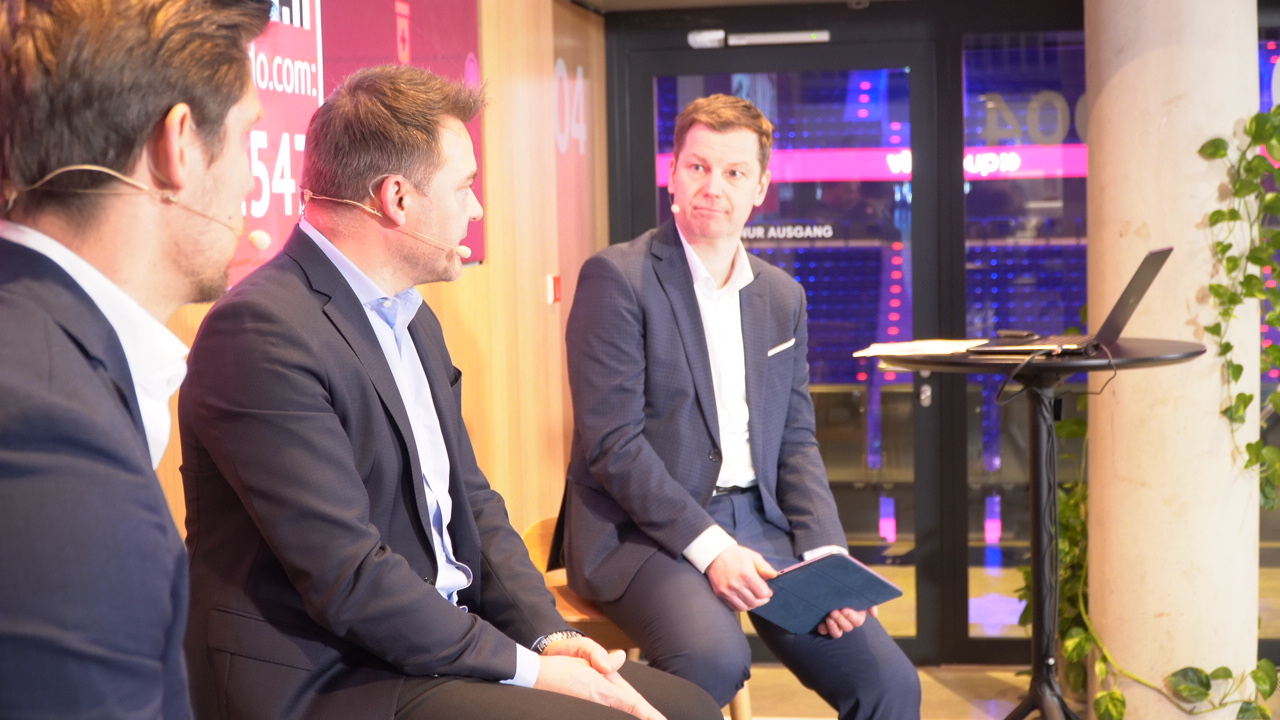
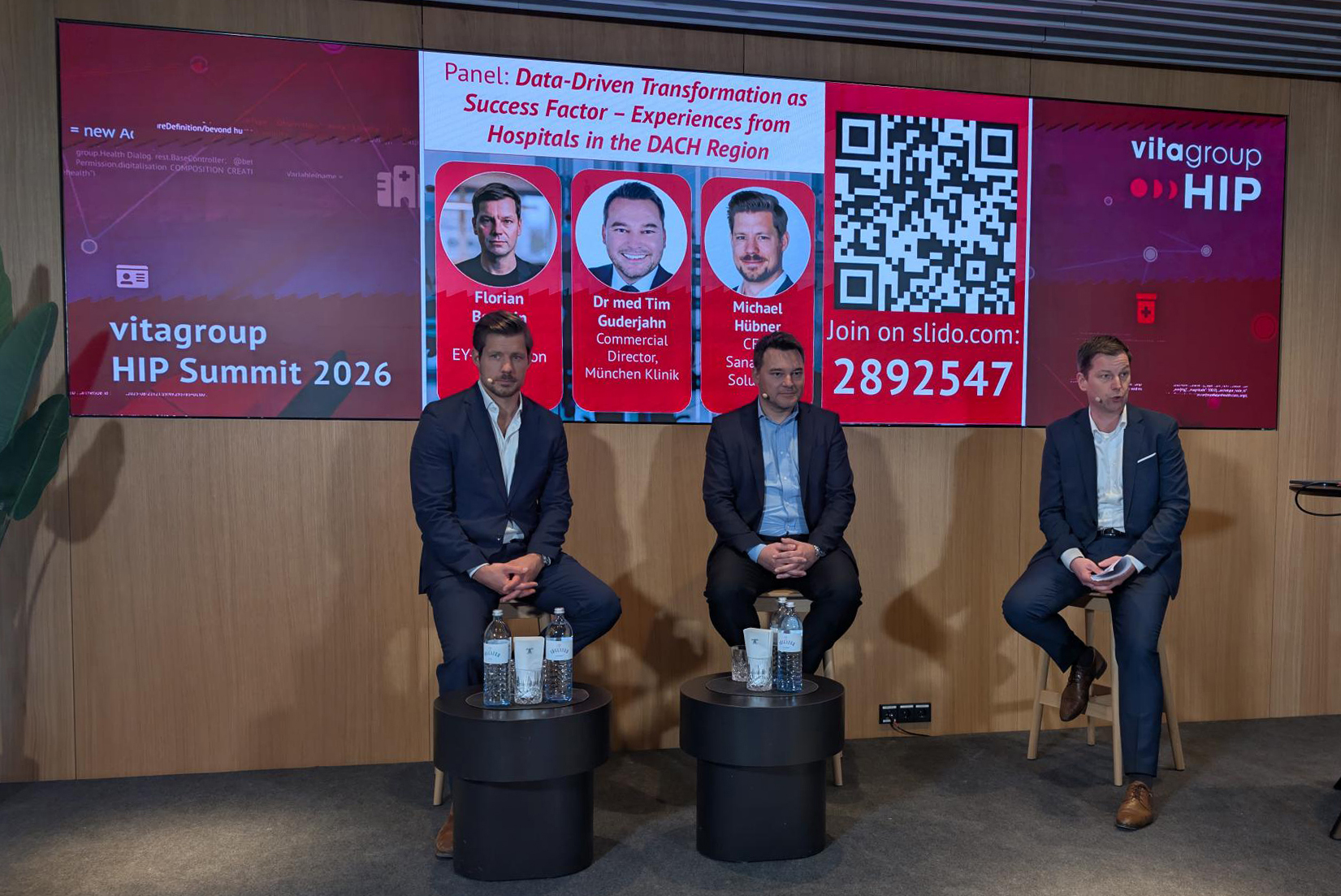
The following panel, “Data-driven transformation as a success factor,” was moderated by Florian Benthin from EY-Parthenon, who outlined the benefits of a data-first strategy based on the experience of hospitals in the DACH region. Dr med Tim Guderjahn, Commercial Director of München Klinik, and Michael Hübner, CEO of Sana Data Solutions, shared their practical insights: successful AI projects only succeed when their value is clear. They improve treatment quality, increase staff and patient satisfaction, and enhance efficiency. At the same time, they create opportunities to open up new business models.
The panellists noted that early waves of transformation in Germany, such as those under KHZG, revealed the immaturity of parts of the ecosystem. Today, organisations approach projects better prepared and set more realistic expectations. Innovation can only be implemented successfully when all stakeholders are involved early – not just decision makers but end users, too.
England’s long journey to a unified patient record
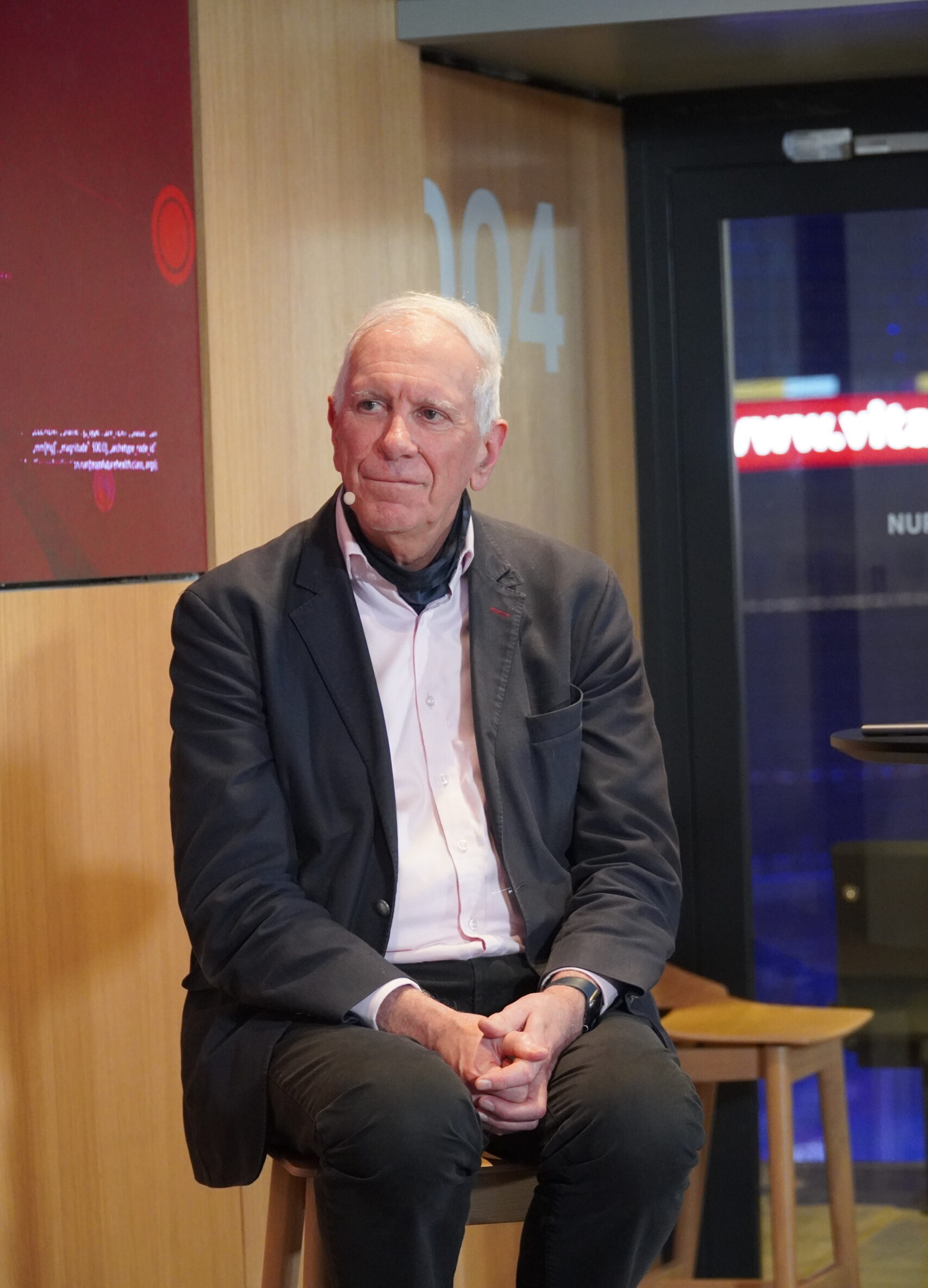
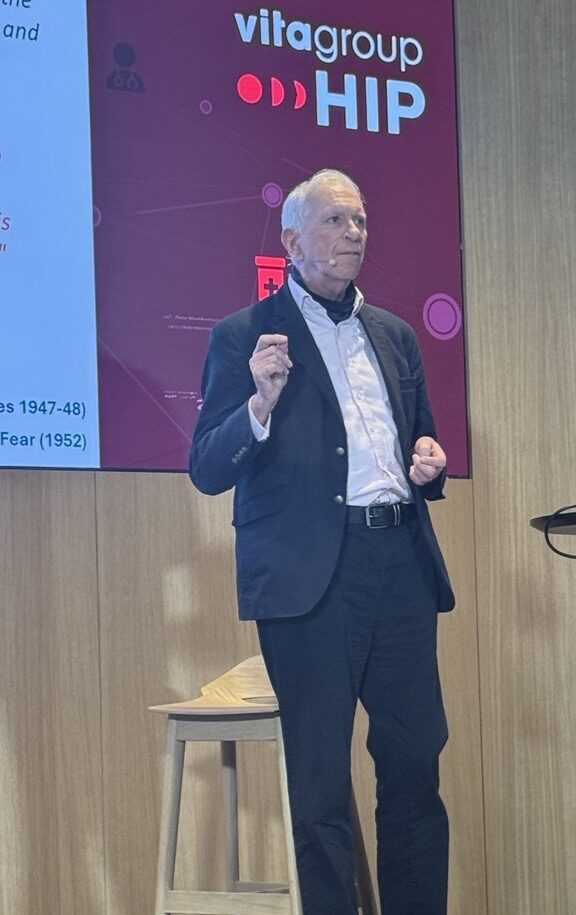
In the afternoon keynote, John Farenden, former NHS Lead for Shared Care Records, took us through England’s long journey towards a single patient record. For over 25 years, the goal in England has been a longitudinal, person-based record, centred on the patient, not the system. Early large-scale national programmes often failed, while more recent progress has come from locally driven initiatives, but the common standards are still lacking. Regional approaches covering three to six million people have emerged as a practical way to integrate and share data effectively across settings. At the same time, the approach is evolving: there is a growing focus on open data, separating data from applications, and moving towards a federated model that connects existing networks. What matters most: trust between stakeholders, consistent standards, strong leadership, and learning across regions, not just within England, but internationally.
Catalonia: connected care with HIP
In the following case study, Dr Clara Calleja Vega and Dr Martin Andreas Koch from the Catalan Health Service (CatSalut) shared Catalonia’s insights into the region’s connected care strategy, with vitagroup’s HIP at the core of the transformation. Across hospitals and providers, thousands of data silos existed – the region was data-rich but information-poor.
The response has been a move towards an open platform model:
- Separating data from applications
- Standardising clinical information using openEHR
- Enabling a shared, longitudinal health record
Catalonia follows a triple-play approach focused on:
- Better care through unified data access
- Stronger analytics and system-level insights
- Faster innovation via an open application ecosystem
The key idea is to build once on a common data layer and reuse the data across care, analytics, and innovation.

European Health Data Space: from ambition to implementation
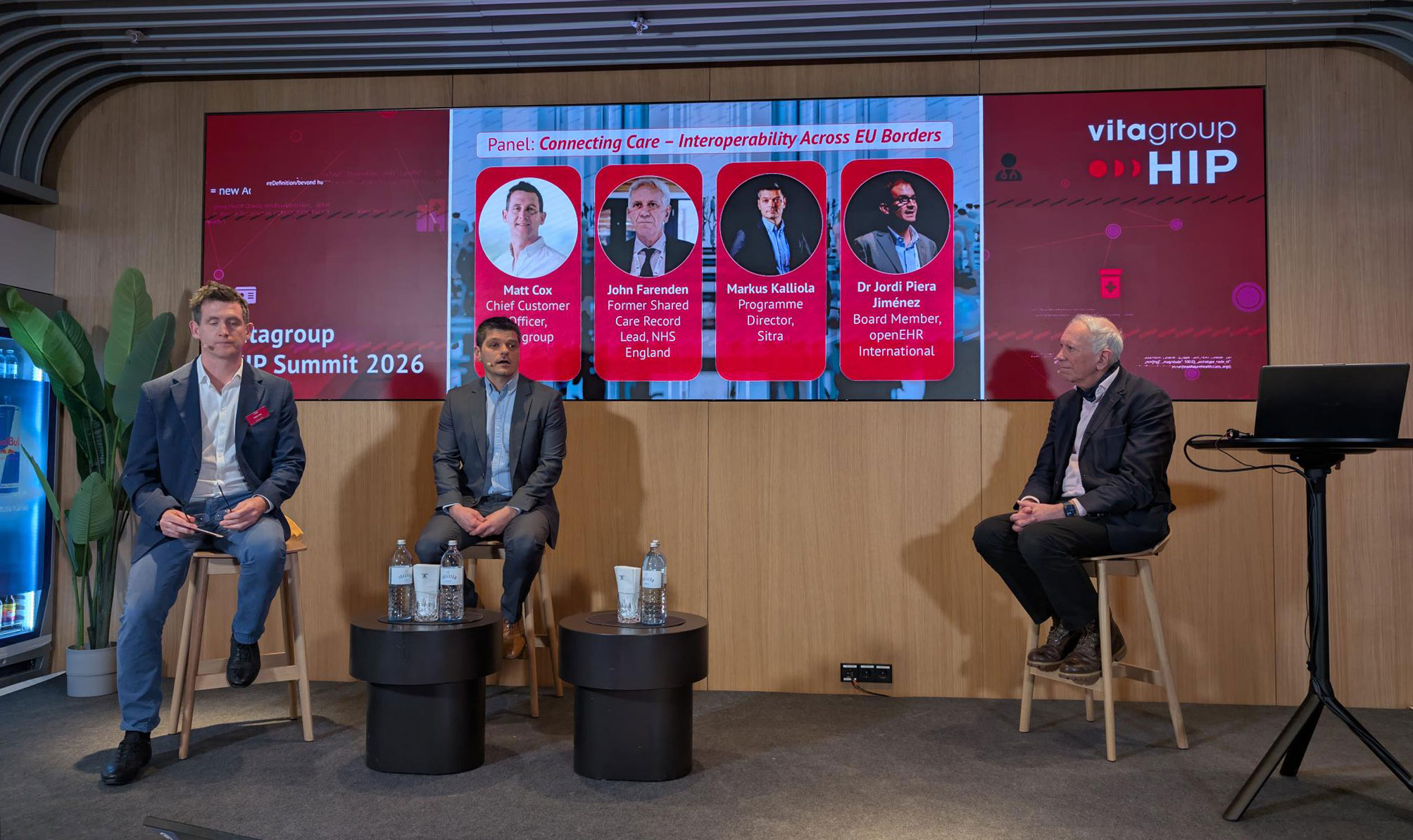
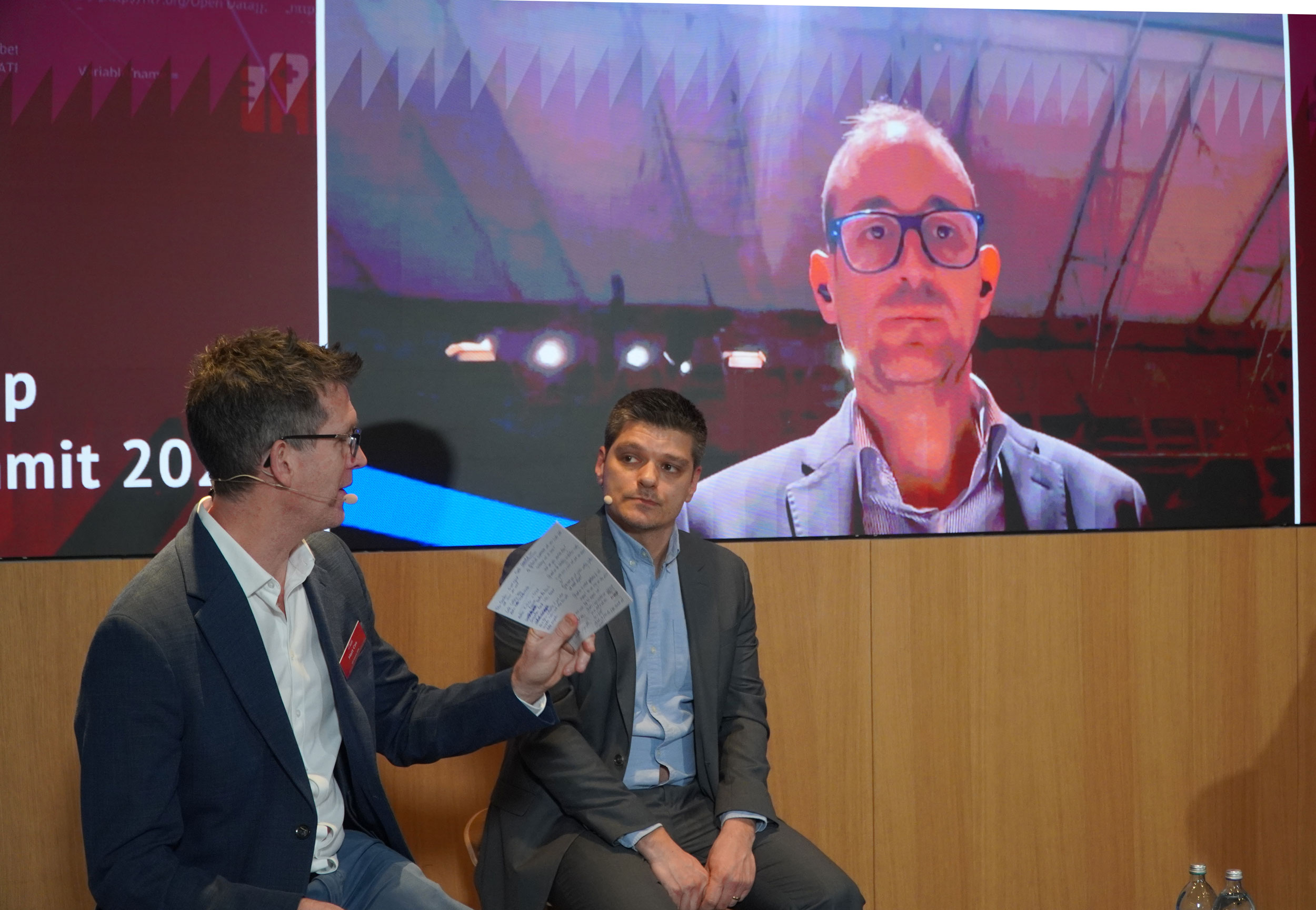
The final panel of the day focused on cross-border data exchange in light of the European Health Data Space (EHDS) initiative. Markus Kalliola, Programme Director at Sitra, Dr Jordi Piera Jiménez, Board Member of openEHR International, and John Farenden shared their views on what is needed to exchange data at such a large scale.
Countries like Estonia and Finland show what is possible: first, strong national foundations – for example, 100% ePrescriptions and centralised data – and then scaling to cross-border use. The greater challenge lies not in connectivity, but in semantics. Catalonia’s experience reflects this: years of groundwork made interoperability achievable, yet uneven maturity across neighbouring countries still limits real cross-border value for now. Standards play a key role as a common language – today nationally, tomorrow across Europe. The key message is clear: move decisively, but don’t rush. Some programmes in England were implemented too quickly, without allowing enough time to resolve semantic interoperability. Building the EHDS is both a long-term and short-term endeavour: establishing solid foundations while pragmatically mapping and connecting systems along the way.
AI – the topic of the day
The summit closed with final thoughts from Nils Hellrung and Thomas Hagemeijer. Artificial intelligence was one of the underlining topic throughout the day, with Nils Hellrung posing a simple yet provocative question to Thomas Hagemeijer: will AI save healthcare, or will healthcare save AI? Thomas Hagemeijer believes that AI is not a bubble. It addresses real problems, and healthcare, representing a significant share of the economy, is a major part of that.
After the official programme, the participants gathered around the ice rink for dinner and informal conversations, continuing the exchange of ideas that had shaped the day.